Published by Reputaro | Trustpilot Growth & Reputation Management
The SaaS sales cycle has a moment that most founders and sales leaders don't fully account for. It happens between the demo and the signed contract. The prospect has seen your product, they're interested, and they are now doing something very specific: they are Googling you.
Not your features. Not your pricing page. You. Your company. What other customers say about you.
And if your Trustpilot profile is sitting at 3.4 stars with a handful of unanswered complaints visible on the first page, a deal that was 80 percent of the way closed quietly dies. You never find out why. The prospect stops responding. Your CRM records it as "lost — no reason given."
This is happening to SaaS companies every single day, and the vast majority don't realise it.
Five years ago, B2B software purchasing was driven almost entirely by sales relationships, analyst reports, and peer recommendations. Platforms like Trustpilot were seen as consumer tools — relevant for online retailers, not enterprise software vendors.
That assumption is outdated.
Today's B2B software buyers — particularly in the SMB and mid-market segments — behave more like consumers than ever before. They run their own research. They read independent reviews. They check G2, Capterra, Trustpilot, and Google reviews before engaging sales teams, and certainly before signing contracts.
According to Gartner research, B2B buyers now spend more time researching independently than they do speaking with vendors during the buying process. Review platforms have become a primary research channel, not a secondary one.
For SaaS companies, this shift has a direct commercial consequence: your Trustpilot profile is now part of your sales deck, whether you've thought about it that way or not.
Not all Trustpilot signals carry equal weight in a B2B context. Based on the patterns we see across SaaS clients, these are the metrics that most directly influence deal outcomes:
Overall star rating: Getting above 4.0 removes you from automatic disqualification in most procurement processes. Getting above 4.5 turns your rating into a positive sales signal.
Response rate to negative reviews: B2B buyers read how you handle complaints more carefully than the complaints themselves. A company that responds promptly, takes ownership, and offers resolution looks like a company that takes customer success seriously. A company that ignores negative reviews looks like one that doesn't.
Review recency: A SaaS company with its last review from eight months ago looks stagnant. Active review collection signals a business with a healthy, growing customer base.
Review content themes: B2B buyers read the text of reviews, not just the stars. Reviews that specifically mention onboarding quality, customer support responsiveness, and product reliability directly address the questions a business buyer is asking.
Flipping the picture: a well-managed Trustpilot profile at 4.5 stars with recent reviews and strong response activity is a genuinely valuable sales asset for a SaaS company.
Sales teams can reference it in outreach. It can be embedded on pricing pages and comparison landing pages. It supports the internal sell. It provides credibility during due diligence. It differentiates you in competitive evaluations. And it gives prospects the independent third-party validation that no amount of first-party marketing copy can substitute.
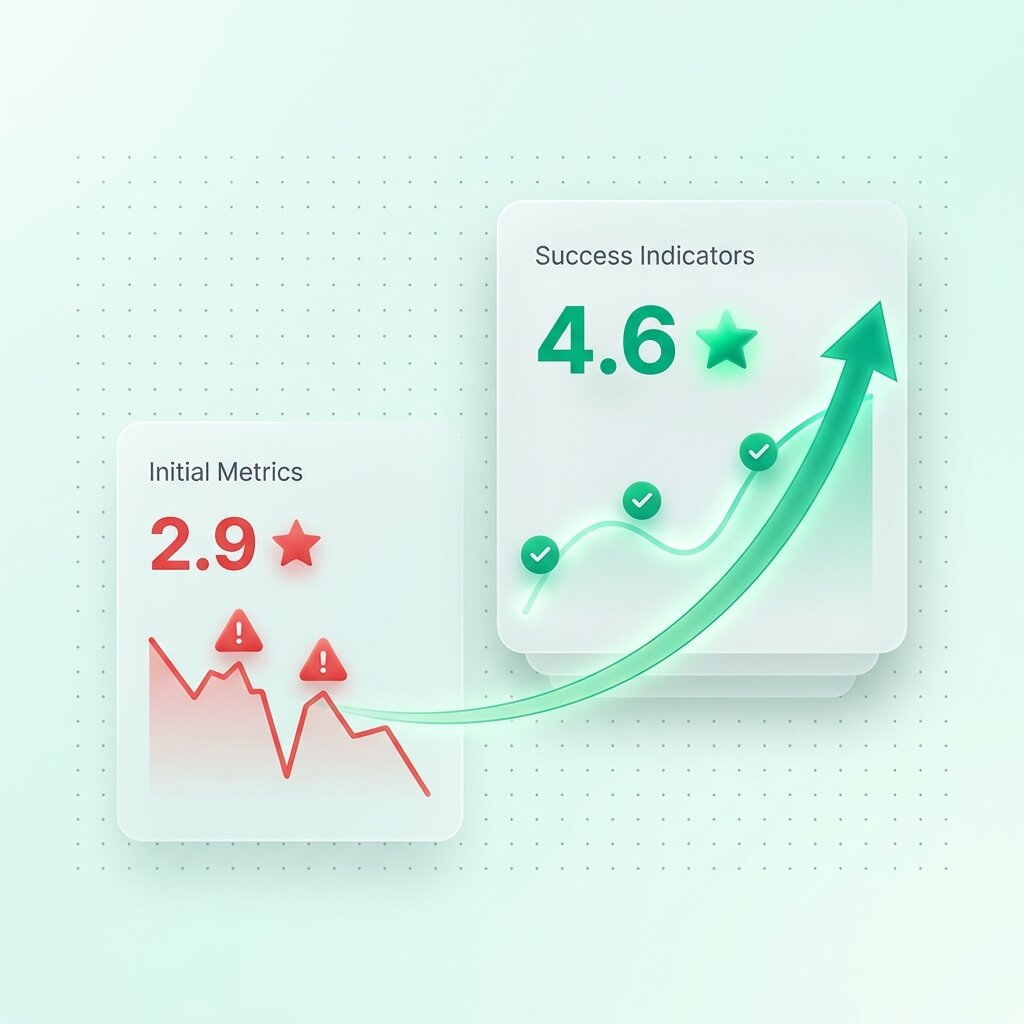
For SaaS companies competing in crowded categories, the investment required to move from a 3.7-star profile to a 4.5-star profile is small relative to the value of even one additional closed deal per month.
If you're a SaaS company and you haven't actively managed your Trustpilot profile, the starting point is understanding exactly where you stand. A full audit will show you your review velocity, response rate, profile completeness, and how many reviews you need to reach your target rating.
From there, a structured review collection process — built into your customer success and onboarding workflows — is the most sustainable long-term approach. Happy customers at key moments in the product lifecycle (successful onboarding, a resolved support ticket, a renewed contract) are your most reliable source of authentic five-star reviews.
At Reputaro, we build and manage exactly this kind of system for SaaS companies — combining profile auditing, review growth, and response management into a single managed service.
Find out what your Trustpilot profile is costing your pipeline
Ready to see where your profile stands? Run a free Trustpilot Audit at reputaro.io/audit