
Published by Reputaro | Trustpilot Growth & Reputation Management
Trust is the product in financial services. It always has been. Before a customer hands over their money, their banking details, or their financial data to a company — especially one they found online — they need to believe, with confidence, that the company is legitimate, reliable, and will treat them fairly if something goes wrong.
Thirty years ago, that trust was established through branch presence, television advertising, and regulatory logos. Today, for the rapidly growing universe of fintech companies, challenger banks, insurance platforms, and digital lenders, it is established through something far more democratic and far more visible: what other customers say about you on review platforms.
And in financial services specifically, the bar for that trust signal is higher than in almost any other sector.
In most product categories, a 3.8-star rating is suboptimal but survivable. Customers buying a new kitchen appliance or a gym membership might accept some level of risk. The downside of a bad decision is limited and reversible.
Financial services carry a fundamentally different risk profile in the minds of consumers. The downside of choosing the wrong lender, the wrong insurance provider, or the wrong payment platform is not inconvenient — it is potentially devastating. Fraud, inaccessible funds, disputed claims, unfair contract terms — these are the nightmare scenarios that financial customers are trying to avoid.
This heightened risk awareness makes financial consumers significantly more sensitive to negative signals — and significantly more demanding of positive ones — than buyers in most other categories. Research consistently shows that financial services customers require stronger trust signals before converting than almost any other industry vertical.
In practice, this means a 3.8-star Trustpilot rating that might cost an e-commerce brand 15 percent of its conversions could cost a fintech company 40 percent or more. The psychological threshold for trust in financial services is simply higher.
The Financial Conduct Authority and equivalent regulatory bodies in other markets have placed increasing emphasis on how financial firms handle customer complaints and feedback. While Trustpilot reviews are not directly regulated, the patterns visible in a company's public review profile — persistent unresolved complaints, recurring themes around billing disputes or mis-selling, evidence of poor complaint handling — are exactly the kinds of patterns that attract regulatory scrutiny.
For FCA-regulated businesses, a publicly visible pattern of unresolved negative reviews is not just a commercial risk.It is a potential compliance risk. Firms that demonstrate systematic failures in customer treatment — even in informal review channels — have found this evidence used against them in enforcement contexts.
The inverse is also true. A financial services firm with a strong, well-managed Trustpilot profile — high rating, responsive to all complaints, evidence of resolution — signals to regulators, as well as customers, that its conduct aligns with its obligations.
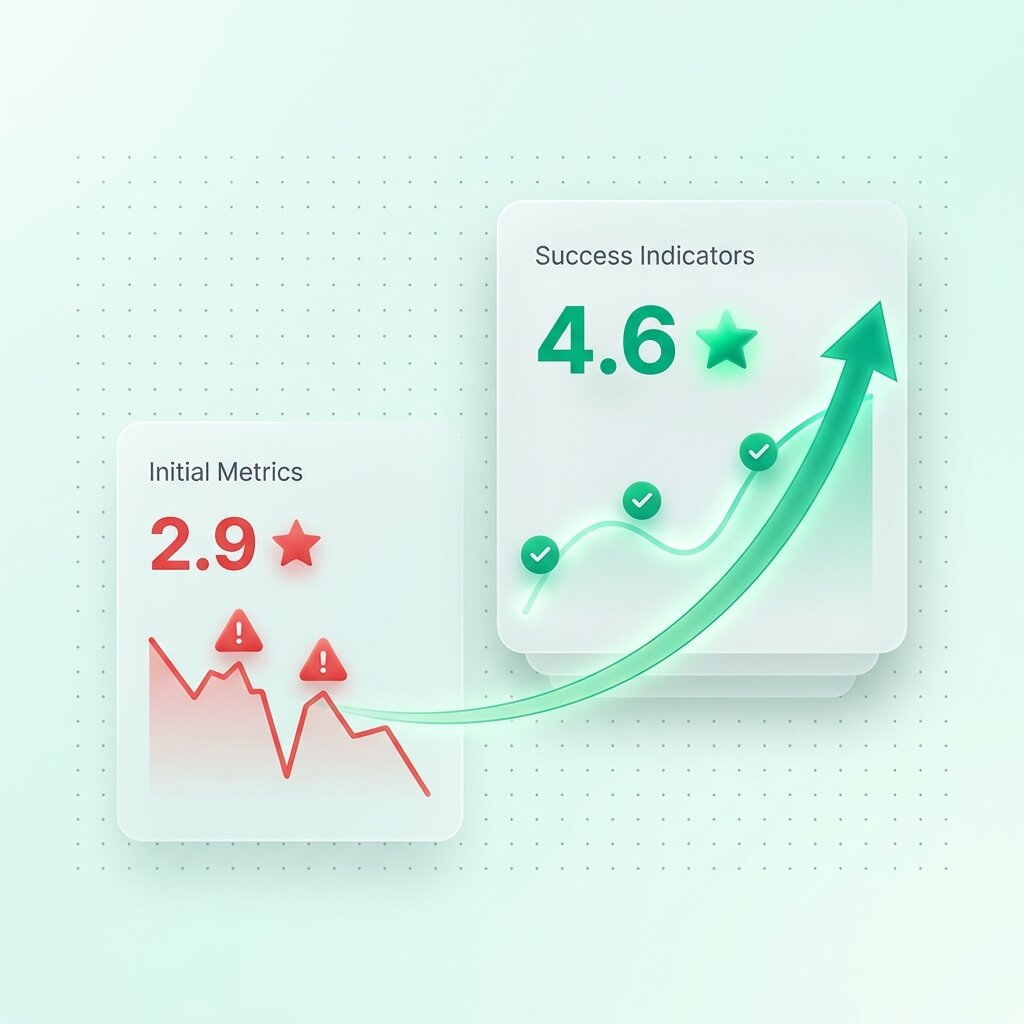
In financial services, 4.0 stars is not a goal — it is a floor. Sitting at 4.0 or 4.1 keeps you in the conversation but does not differentiate you. In a sector where customers are making high-stakes decisions and have multiple credible alternatives, the competitive advantage goes to firms that have broken into the Excellent tier.
A 4.5+ rating in financial services says something specific and powerful: enough customers trust this company with their money that they came back voluntarily to say so publicly. That signal, for a new customer transferring their ISA or setting up a business account, is worth more than any amount of paid advertising copy.
The firms that have understood this early — the Monzos, the Tides, the Revoluts that built Trustpilot reputation management into their growth strategy from the beginning — have used it as a genuine competitive moat. Their ratings compound; their conversion rates outperform incumbents; their acquisition costs fall.
Financial services firms face specific constraints in review collection that other sectors don't. Incentivising reviews is prohibited under FCA conduct rules, and invitation-only review collection must be applied consistently to all customers — not selectively to happy ones.
Within these constraints, there is still significant room to build a strong review profile. The keys are systematic review invitation at the right moments in the customer lifecycle, professional and consistent response to all reviews, and rapid escalation and resolution of complaints that have surfaced publicly.
At Reputaro, we work with financial services companies to build compliant, effective review collection systems that grow ratings sustainably — without crossing the conduct boundaries that regulated firms must respect.
Find out where your financial services Trustpilot profile stands — run a free Audit at reputaro.io/audit